This blog post is for parents who struggle with food textures. It is divided into two sections: the first discusses children who are more sensitive to certain textures, while the second focuses on foods that are difficult to chew and the role of oral motor skills.
What is a ‘tricky texture’?
There is no textbook definition of a tricky texture, but it generally refers to a food texture that a child finds difficult to manage. For an infant, this could be finger foods, as they are not yet able to eat them effectively. However, a child who is sensitive to certain textures may struggle with foods that have combined textures.
For example, they may be able to eat smooth purées like mashed potato without lumps and tolerate separate pieces of mixed vegetables such as corn and peas. However, when those same peas and corn are mixed into the mashed potato, they might struggle. This combination of textures can be challenging. A common scenario I see in practice is children who can eat smooth yoghurt but refuse yoghurt with pieces of fruit mixed in.
How to encourage a child to eat foods with ‘tricky textures’?
There is nothing wrong with children having difficulties with certain textures. As parents, we can support them in navigating these ‘tricky textures’. If your child struggles with pasta mixed with sauce, try serving the pasta and sauce separately. During the meal, encourage them to try mixing a small amount, even if it is just one piece of pasta in the sauce!
Using the steps to eating from my previous post, your child is now interacting with a food of a new texture. From here, encourage them to take further steps such as touching, licking, or tasting the food. If they eat even one piece of pasta with the sauce, that is a small victory. It is okay if they continue to eat the pasta separately for the rest of the meal. What matters is that they are slowly becoming more comfortable with the texture and the fact that they are willing to try a new texture.
The key to helping children manage tricky textures is ongoing exposure. Continue offering these foods regularly until they start to feel comfortable with them. While they may not immediately love the new texture, when a child starts accepting food instead of refusing foods, stress around eating will go down, making mealtimes more enjoyable.
Foods that are difficult to chew
There is no doubt that some foods are harder to chew than others. Many families tell me, “My child will eat hard foods like crackers, but won’t eat meat, bread, or vegetables.” This is because crackers break down easily in the mouth, whereas foods like meat and roasted vegetables require more complex chewing skills.
There are many different food textures, and a baby needs to develop appropriate oral-motor skills to break food down into small enough pieces to swallow. When a baby is only given textures that require minimal chewing, they miss out on opportunities to strengthen their oral-motor skills. Over time, this can lead to refusal of certain textures simply because they do not have the ability to chew them properly.
When should babies be exposed to foods that requires more chewing?
With close supervision, babies can be introduced to more challenging textures through baby-led weaning. You can read more about this approach in my previous post here. Infants exposed to baby-led weaning naturally experience a variety of textures and get more practice with chewing compared to those who are fed only smooth purées for the first few months.
This does not mean that all meals need to be finger foods. You can offer a mix of traditional purées, lumpy foods, in addition to finger foods. This allows babies to explore and learn about different textures at their own pace.
As children learn to eat, they also develop an understanding of which foods are safe to eat and which are not. For example, I allow my children to explore foods with bones or shells, and they quickly learn which parts are edible and which are not. I encourage them to hand over the inedible parts to me.
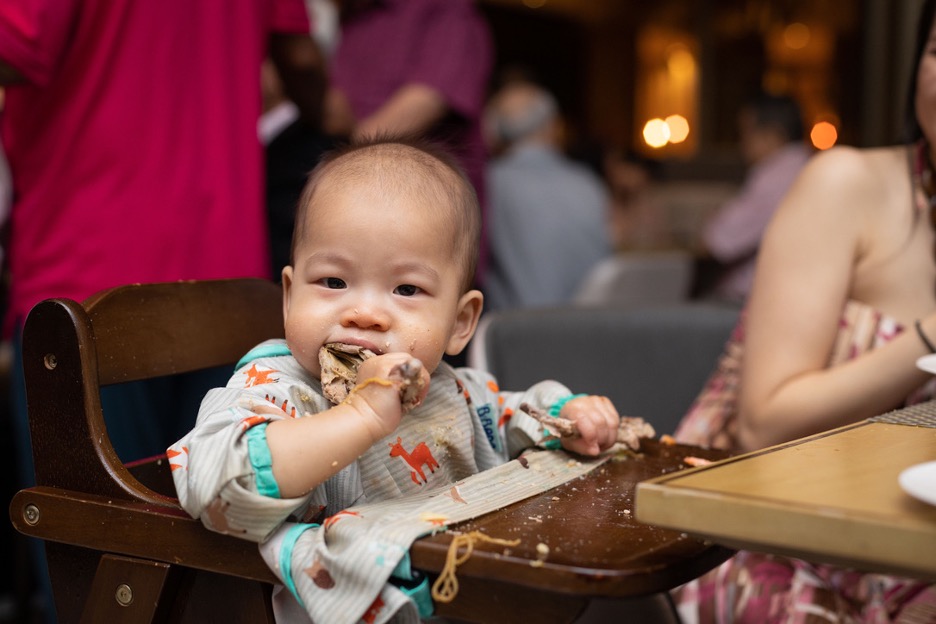
Here is a photo of my oldest son gnawing on a rib at 11 months old.
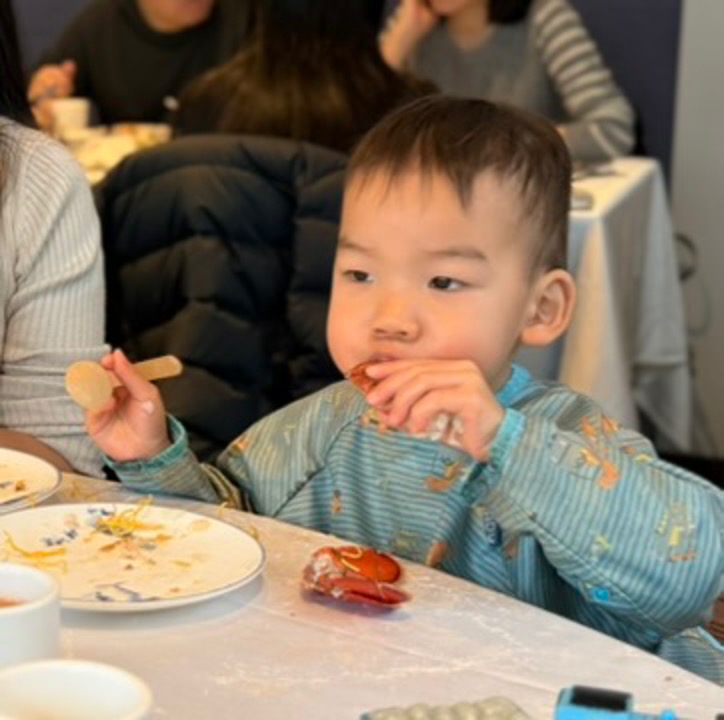
Here is a photo of my youngest attempting to eat a lobster shell before before realising it was not edible, despite me telling him he couldn’t eat it.
Does your child have delayed oral-motor skills?
Children with delayed oral-motor skills may struggle with feeding, which can create stress at mealtimes and lead to negative associations with food. Below is a table outlining different types of oral-motor delays and how they impact feeding, as according to the Royal Children’s Hospital:
| Oral motor behaviour | Associated feeding difficulty |
| Retained feeding reflexes e.g. tongue thrust | Moving food to the back of the mouth for swallowing. |
| Limited range of tongue movements | Moving foods around mouth to prepare for swallowing |
| Limited range of jaw movements | Biting and chewing limiting the variety of textures |
| Poor lip closure | Removing food from spoon. Moving food to the back of the mouth for swallowing |
| Hypersensitive gag reflex | Tolerating new tastes and textures |
It is no surprise that children with delayed oral-motor skills will require assessment by a speech pathologist trained in feeding. A paediatric speech pathologist can provide families with strategies to support their child’s development and recommend appropriate food textures that are safe for the child.
If you suspect your child has delayed oral-motor skills, it is essential to see a GP to rule out any underlying medical causes. At the same time, ask for a referral to a paediatric speech pathologist trained in feeding. As there can be waiting lists for these services, I highly recommend getting on the waitlist as soon as possible.
If your child struggles with food textures, remember that progress takes time. Keep offering opportunities for exploration, celebrate small successes, and seek support from professionals if needed. With the right approach, mealtimes can become more enjoyable and less stressful for the whole family.
