As a paediatric dietitian, I see children from premature babies to teenagers with various nutritional issues. One of the most common referrals I get is fussy eating, particularly in children who are under the age of five. However, I also work with school-aged children who continue to have difficulties with eating. Now that I have two sons of my own, I have experienced firsthand the challenges of managing fussy eating in young children.
Fussy eating is not only normal in children, but also an unexpected part of a child development, which is a good thing. It signals your child’s growing independence as they express their opinions about food. In the mind of a little child, there are very few things they can control. For an example, a child does not get to decide where to go or how long to stay at the playground. So they will try to exert control over other things, such as whether or not they want to put on clothes, and if they want to eat foods that are served to them.
Children who are fussy eaters can make mealtimes stressful, often leading to power struggles between the child and their parent or caregiver. But what if we could make mealtimes enjoyable? Is it possible to serve one meal for the whole family without having to prepare a special ‘kids’ meal’? The short answer is yes, it is possible. The key is consistency and approaching mealtimes as a family, with the goal of making mealtimes a positive experience for the family.
Common Fussy Eating Behaviours
Fussy eating can present in many ways, such as:
- Wanting the same food every day
- Liking a food one day but refusing it the next day
- Rejecting food that has been offered but will happily eat ‘junk food’
- Preferring one food group over another, such as favouring fruit over vegetables (which is completely normal)
- Needing food to be presented in a particular way
- Having tantrums when their food preferences are not met
- Playing with food rather than eating it
- Putting food in their mouth but not swallowing it
- Only eating certain foods if there is an incentive, such as the promise of a dessert after
- Refusing to eat certain foods at home but will eat them elsewhere, such as at childcare or with grandparents
Does this sound familiar? If so, read on for strategies that you can implement to help make mealtimes less stressful.
Avoid Power Struggles
A power struggle happens when parents try to control what their child eats (often with good intentions), while the child resists. Winning a mealtime battle by offering rewards, such as chocolate, might seem like a success in the short term, but in the long run, it teaches your child that they only need to eat certain foods if there is a reward. Over time as children grow older, they will become better negotiators. This reward-based-system can spiral out of control where they will demand bigger and better rewards. What happens when you run out of food-based incentives? As the saying goes, you may have won the battle, but you have not won the war.
How to Put an End to Mealtime Battles
I highly recommend the Ellyn Satter Division of Responsibility (DoR) in Feeding. If you haven’t heard of it before, I strongly encourage you to read this one-page summary of Ellyn Satter’s Division of Responsibility in Feeding . In summary, feeding responsibilities are divided as follows:
| Parent’s responsibility | Child’s responsibility |
| Decide what food to offerDecide when to offer foodDecide where to eat foodMake mealtimes a positive experience | Decide what they want to eatDecide how much they will eat |
Now that you have an idea about the DoR in feeding, here are some practical additional strategies on how to create a positive mealtime experience whilst maintaining the DoR framework.
Additional Strategies to Support Positive Mealtimes
- Avoid pressuring your child to eat. Too much pressure can reduce their appetite.
- Eat together as a family. This helps model positive eating behaviours.
- Acknowledge likes and dislikes. If your child dislikes a food, acknowledge it and say, “I hear that you do not like this food, and that is okay. You can check in with your body and decide how much you would like to eat.”
- Celebrate small wins. Even if your child licks a food but doesn’t eat it, it is still positive step forward that they are willing to try the food.
- Maintain a consistent mealtime routine. Have a set meal and snack times. Have a small routine before meals such as getting your child in setting the table and handwashing before meals.
- Give your child your full attention at mealtimes. No screens or phones at the table. Children tend to eat better when parents are present and engaged during mealtimes.
- Accept that mess is part of learning. Eating is a skill, and children learn best through play and exploration. Mess can always be cleaned up, but a child need opportunities to learn about food before they will eat it.
- Offer a variety of foods. Avoid limiting foods to only what your child already likes, as exposure to different foods increases acceptance over time.
- Allow your child to say “no, thank you” when they are finished. Avoid making a separate meal to persuade them to eat more, as this reinforces picky eating habits can cause power struggle between parents and child.
- Change food presentation. Your child may reject carrot sticks but happily eat grated carrots.
- Observe rather than dictate. If your child eats baked potato strips but not boiled potatoes, say, “I notice you enjoy baked potato strips, but you’re not too sure about boiled potatoes.” This encourages awareness and acceptance of different food textures and preparations.
When to seek help?
If your child’s eating habits seem more extreme than the usual typical fussy eating, they may fall into the category of ‘problem feeders.’ I want to share this handout from Dr Kay Toomey that outlines the differences between fussy eaters (picky eaters) and problem feeders.
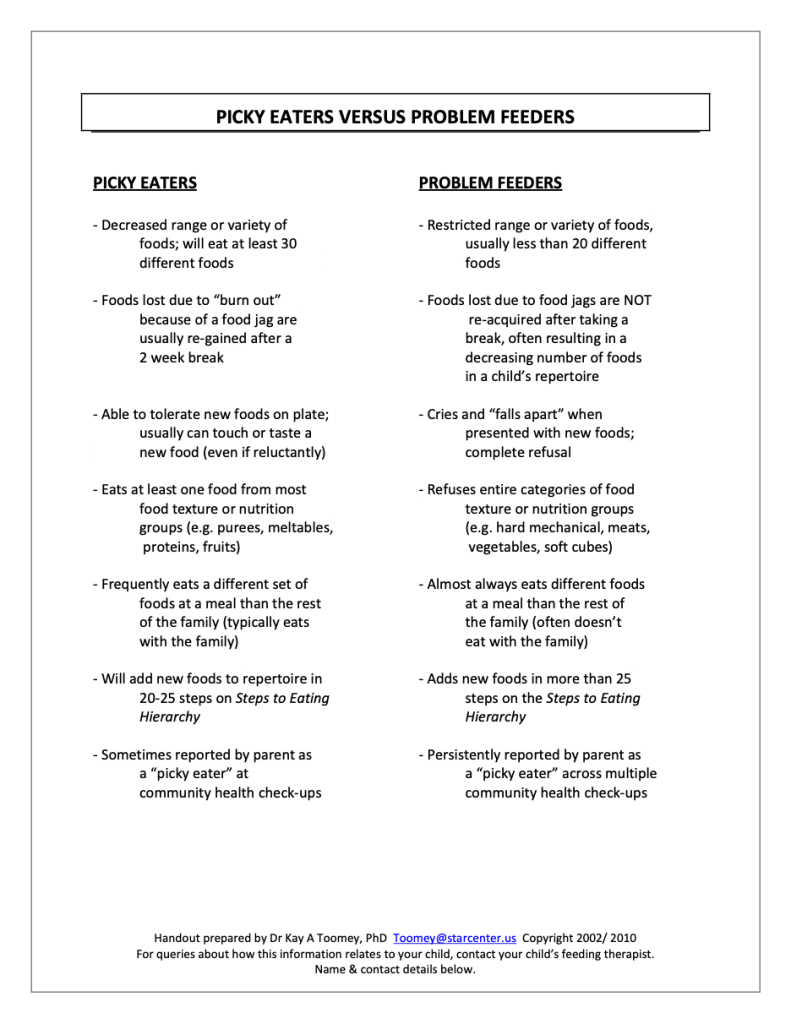
If you think your child is a problem feeder, your child might benefit from having more support by having a chat with your GP or paediatrician. They can refer you to a feeding specialist, such as an occupational therapist, speech pathologist, or a dietitian who has done extra training in feeding difficulties.
Fussy eating is a common part of childhood, but with a consistent approach, mealtimes can become a positive and enjoyable experience for the whole family. By following these strategies, you can tackle fussy eating behaviours whilst making mealtimes a positive experience.
