Baby-led weaning (BLW) is a method of introducing solids that is becoming increasingly recognised, with many potential benefits. As both a paediatric dietitian and a mother of two boys, I personally appreciate the concept of baby-led weaning. Personally, the main pros of BLW for my family are:
- I cook the same family meal as my baby (minus salt / sugar / sauces / honey etc) – ensuring food is texturally modified so that the food is soft enough and is not a choking hazard
- I get time to focus on my toddler whilst my youngest work on his solids as I don’t have to feed him
- Allow greater independence in my baby’s relationship with food
- Almost zero need to use pre-packaged products
- Opportunity for baby to practice on their oral-motor skills as well as feeding skills
So, let’s explore what all the hype is about!
What Is Baby-Led Weaning?
Baby-led weaning involves introducing solids by allowing your child to take the lead in their eating journey. A key principle of BLW is that parents do not feed their baby directly. Instead, their role is to present food to the baby and allow the baby to explore, decide what to do with the food, if they are going to eat, and how much to eat.
It’s important to note that baby-led weaning may not be ideal for families with a low tolerance for mess, or at least it takes quite a bit of getting used to manage the mess. As babies develop their eating skills, messy eating is inevitable. Since babies lack the fine motor skills required to grasp food as adults do, BLW foods are generally offered in larger, chunkier pieces. There are numerous websites with specific instructions on preparing BLW-friendly foods, so I won’t go into too much detail about that here. Instead, I’ll provide a general overview of what BLW might look like.
General Idea of How BLW Looks Like
Around six months of age, when your baby is starting solids, you can expect to offer fairly large pieces of food. For example:
- An orange cut into eight wedges, offering one wedge at a time, or offering a slice of avocado (with or without skin on as per parental preference).
- A lamb cutlet, a 2-inch strip of chicken, or a baby palm-sized portion of a meat patty.
- A hard-boiled egg cut into quarters.
- A piece of cauliflower floret, a softly steamed carrot stick, a tomato wedge, or a long strip of cucumber cut into quarters lengthwise.
- A quarter slice of bread, a piece of penne pasta, or strands of noodles for grasping and exploring.
As your child grows older, the food pieces gradually become smaller. By around 12 months, they should be capable of picking up small food items with their pincer grip, such as individual peas, corn kernels, or diced chicken cut into 1 cm cubes.
As a paediatric dietitian, I appreciate BLW because it allows children to have full control over what and how much they eat. Parents are responsible for deciding what food is offered and when, following Ellyn Satter’s Division of Responsibility, which I strongly support. This approach encourages children to eat in response to their hunger and satiety cues that can help build an important foundation for a healthy relationship with food.
Some Key Points To Consider
At around six months, babies are still developing their gross and fine motor skills and may struggle to self-feed efficiently. This can lead to frustration, particularly if they are hungry but unable to get food into their mouths. Parents may misinterpret this as their baby being full or uninterested in food when they are struggling with the mechanics of eating.
Additionally, babies who have had limited opportunities to self-feed or those with delayed development may find BLW particularly challenging. For instance, a 14-month-old with the feeding skills of an eight-month-old may be clumsy with self-feeding, leading to increased reliance of milk instead of solid food. This could result in inadequate nutrition and missed opportunities to explore different textures, tastes, and other sensory aspects of food during the critical period when they are most receptive to trying new things. There are studies out there to show that the first year of introducing solids can be critical to increase acceptance of a variety of food textures and develop the necessary oral motor skills to progress to family foods.
BLW often bypasses the traditional purée stage, which may result in more frequent gagging. Parents sometimes mistake gagging for choking, which can cause anxiety and lead to a slower introduction of solids—potentially delaying exposure to essential foods. I have seen many families introducing only “safe foods” where their babies will not gag, but this means a restrictive variety of taste and textures and exposure of food which can cause an increased chance a child refusing foods later on or a child being labelled “fussy eater”. However, choking remain a common concern among parents, despite having plenty of research that has shown BLW does not increase risk of choking compared to traditionally spoon fed infants. I particularly like this systematic review!
Adequate Iron Intake Is Essential
One challenge with BLW is ensuring adequate iron intake. Babies who struggle with high-iron foods, such as meat, may not get enough iron if they lack the oral motor skills needed to chew effectively. Additionally, iron-fortified cereals, which require a spoon for feeding, may be underutilised in BLW approaches. To address this, parents can offer preloaded spoons with foods like pureed chicken, beef, lamb, pork or iron fortified cereals, allowing babies to self-feed while still high iron food which is essential for fully breast fed babies older than 6 months old.
Ultimately, BLW can be a wonderful way to encourage self-regulation and independence in eating. However, parents should remain flexible and responsive to their baby’s needs, ensuring they receive adequate nutrition while supporting their developmental readiness for self-feeding. I find this website useful for parents wanting to understand a bit more about BLW. Also, here are a few BLW photos of food for ideas and inspiration. Whatever decision you choose to introduce solids to your child, make sure it is an enjoyable journey for yourself and baby!
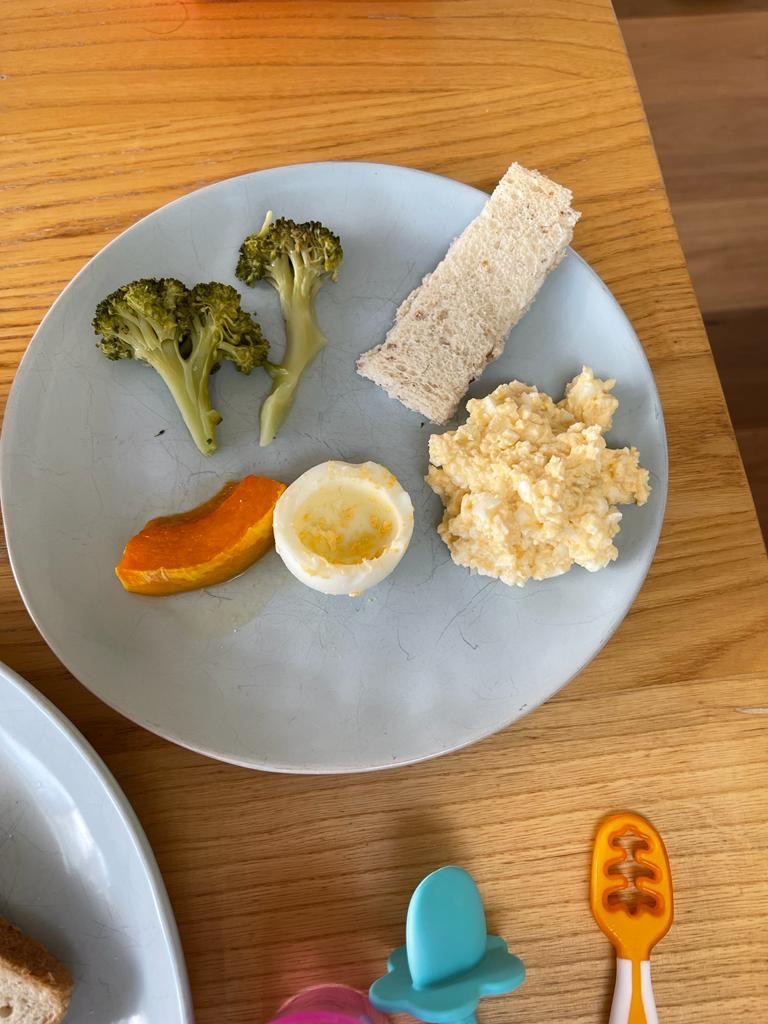
Broccoli florets, strip of very lightly toasted bread, pumpkin and egg (with yolk taken out and mashed with the other half of the egg and greek yoghurt).
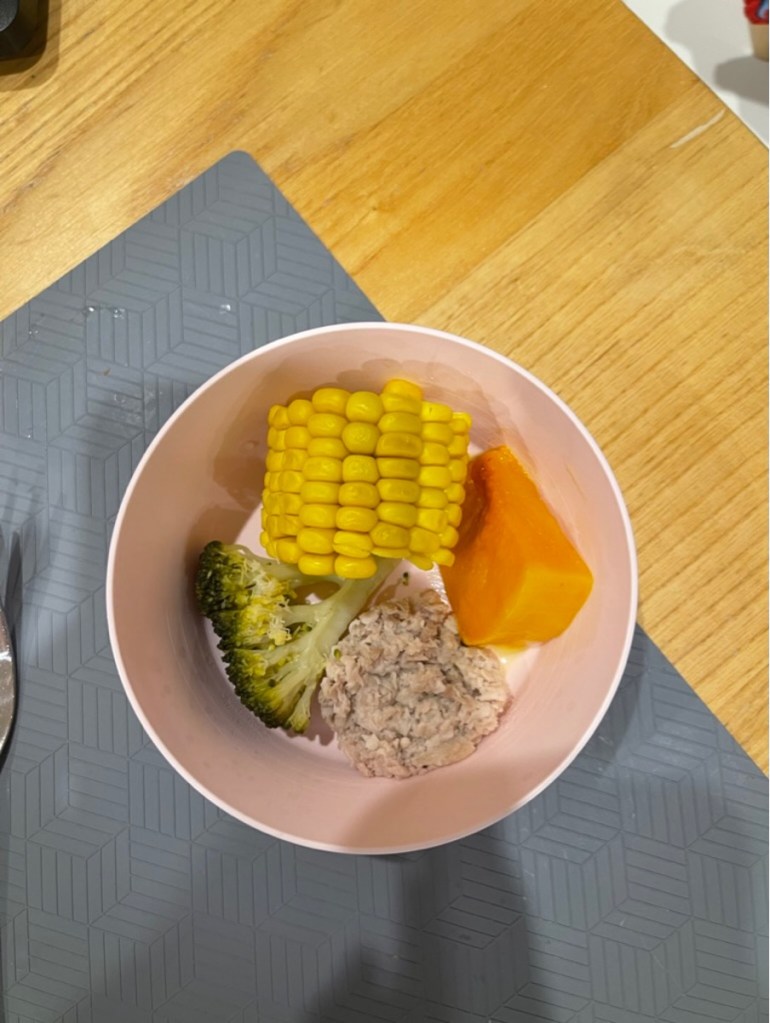
Corn (both my son’s favourite!!), broccoli floret, chopped up meat (mixed with no added salt broth) and pumpkin.

Mashed potato, scrambled egg with spinach, corn, potato and carrot pieces.

An extra fancy meal for Easter! We had corn, steamed egg and water custard (asian style), sweet potato, a piece of lamb rack, rice with home made baked beans with plenty of spoons for me to pre-load, and for my son to attempt to scoop for himself.

An easy snack of fruit and yoghurt
