What Is the Low FODMAP Diet?
The low FODMAP diet is typically recommended for individuals who have been medically diagnosed with irritable bowel syndrome (IBS). IBS is a diagnosis of exclusion, meaning extensive medical assessments are required to rule out other potential causes of gut-related symptoms.
The low FODMAP diet can be quite restrictive, especially for children, as it involves restricting a range of carbohydrates that are poorly absorbed by the body. The term “FODMAP” stands for fermentable oligosaccharides, disaccharides, monosaccharides, and polyols. The main types of carbohydrates that need to be restricted include:
- Oligosaccharides such as fructans and galacto-oligosaccharides (GOS)
- Fructose
- Lactose
- Polyols (a type of sugar alcohol)
High FODMAP foods are commonly found in a variety of fruits, vegetables, legumes, dairy products, and a variety of grains. It is important to note that high FODMAP foods are not inherently ‘unhealthy’ or ‘bad’ for the body, but rather high FODMAP foods can trigger unpleasant abdominal symptoms in some individuals. Restricting high FODMAP foods may provide symptom relief for those with IBS.
To put it simply, children should not follow restrictive diets unless medically necessary. The low FODMAP diet is considered a medically prescribed diet intended to help manage gut symptoms.
What Are the Common Symptoms of Irritable Bowel Syndrome?
Some of the common complaints I hear from children who are referred for a low FODMAP diet include:
- Abdominal pain
- Constipation
- Diarrhoea
- Bloating (abdominal distension)
- Excessive wind (frequent flatulence)

When Should the Low FODMAP Diet Be Considered?
It is crucial to note that I personally do not accept referrals for families wanting to trial a low FODMAP diet without a proper diagnosis from a healthcare professional. My referrals typically come from GPs, paediatricians, or paediatric gastroenterologists.
A low FODMAP diet should only be introduced as a last resort for children experiencing moderate to severe gut issues after medical causes have been ruled out. The low FODMAP is NOT recommended for treating inflammatory bowel diseases, gluten sensitivity, or small intestinal bacterial overgrowth in children.
Additionally, I do not recommend a low FODMAP diet for certain groups, including:
- Children with eating disorders
- Children with highly restrictive diets
- Children with avoidant/restrictive food intake disorder (ARFID)
- Children experiencing poor growth
- Children with severe constipation
- Children with unmanaged nutritional deficiencies
- All infants, toddlers, and most preschool-aged children
The ESPGHAN position paper provides further guidance on when a child may be considered for a low FODMAP diet:
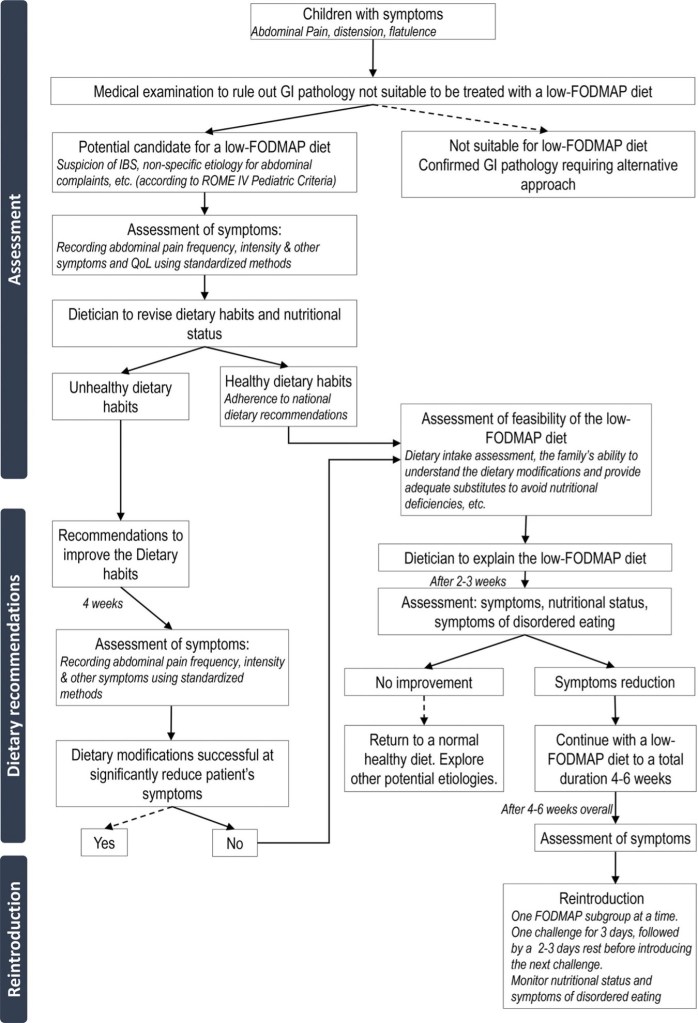
Why Isn’t the Low FODMAP Diet Commonly Recommended for Children?
The low FODMAP diet was originally developed based on clinical studies mostly in adults. Since children have unique nutritional needs at different developmental stages to promote different stages of growth, the low FODMAP diet can pose a risk of nutritional deficiencies if not managed correctly. As the low FODMAP diet is quite restrictive, it can be challenging to balance the low FODMAP diet alongside the additional nutritional demands required for healthy growth to prevent nutrition deficiencies.
It is crucial for parents to understand that the low FODMAP diet consists of three key phases:
- Restriction – Eliminating all high FODMAP foods.
- Reintroduction – Systematically reintroducing high FODMAP foods to identify specific triggers.
- Personalisation – Working with a trained paediatric dietitian to develop a balanced meal plan tailored to the family that meets the child’s nutritional needs while managing symptoms. This includes ongoing re-challenge of certain high FODMAP food to expose children to a variety of food.
Compliance is a key consideration when implementing the low FODMAP diet in children. Therefore, families should look for a dietitian who is both trained in using the low FODMAP diet and skilled in working with children and families.
A Different Approach
In some cases, I might adapt my approach to better suit the family’s needs. For families with children under five years old who are desperate to trial the low FODMAP diet, I may try a more “gentle” approach of the FODMAP diet. This method involves three key steps:
- Conducting a thorough dietary assessment of the child’s current intake.
- Suggesting targeted dietary modifications by reducing obvious high loads of FODMAP and recommending suitable low FODMAP alternatives.
- Ongoing monitoring to assess symptom improvement and prevent nutritional deficiencies whilst being on the low FODMAP diet
Why? This is because young children may struggle with compliance, especially if they do not understand why they can no longer eat their favourite foods. It is also essential for young children to maintain exposure to a wide variety of foods to support the development of healthy eating behaviours and to prevent fussy eating.
How Long Should the Low FODMAP Diet Last?
The initial restriction phase of the low FODMAP diet typically lasts two to four weeks. The reintroduction phase may take longer, depending on the family’s goals, symptom control, and compliance. In my experience, the entire process, including liberalisation of the low FODMAP diet, usually takes around six months.
In summary, under the guidance of a paediatric dietitian trained in the low FODMAP diet, a child can safely follow the low FODMAP diet for a short period, followed by liberalisation of the low FODMAP diet that ensures adequate nutritional intake for growth. If you are considering the low FODMAP diet for your child, your first step should be consulting a doctor before seeking support from a paediatric dietitian with expertise in this area.
Further reading here.
