This will be the second last part of my five-part series on the core food groups. As mentioned previously, a balanced diet includes food from all five groups: grains and breads, fruits, vegetables and legumes/beans, dairy products, and meat or meat alternatives. In today’s post, I will focus on meat and meat alternatives.
Did You Know?
Meat and meat alternatives constitute lean meat and poultry, fish, eggs, tofu, nuts and seeds, and legumes or beans. Here is a breakdown of all the different categories.
- Lean meat such as beef, pork, lamb, veal, goat, kangaroo.
- Poultry such as chicken, duck, turkey.
- Fish and seafood such as fish, crabs, lobster, prawns, oysters, muscles, scallops, clams.
- Eggs such as chicken legs and duck eggs and pigeon eggs.
- Nuts and seeds such as Armond nuts, Brazilian nuts, cashew nuts, pinenuts, walnuts, pistachio nuts, macadamia nuts, peanuts, hazelnuts, sesame seeds, pumpkin seeds, sunflower, seeds, nut spreads.
- Legumes and beans such as chickpeas, lentils, tofu, kidney beans, red beans, black beans, soya beans
For the rest of this post, I will refer to this food group as “meat and meat alternatives.”
Why Are Meat and Meat Alternatives Important?
Meat and meat alternatives are a vital source of protein and healthy fats. While children obtain a significant amount of protein from dairy, meat and meat alternatives provide essential vitamins (such as vitamin B12), minerals (such as iron and zinc), and long-chain polyunsaturated fatty acids like DHA. Protein is particularly important for children as they are still growing.
Animal-based proteins such as lean red meat, poultry, eggs, and seafood are excellent sources of vitamin B12, iron, zinc, and DHA. Nutrients from animal-based protein are generally more bioavailable than those from plant-based sources. However, research suggests that consuming plant-based proteins offers significant health benefits, such as reducing the risk of cardiovascular disease and certain cancers, including colon cancer.
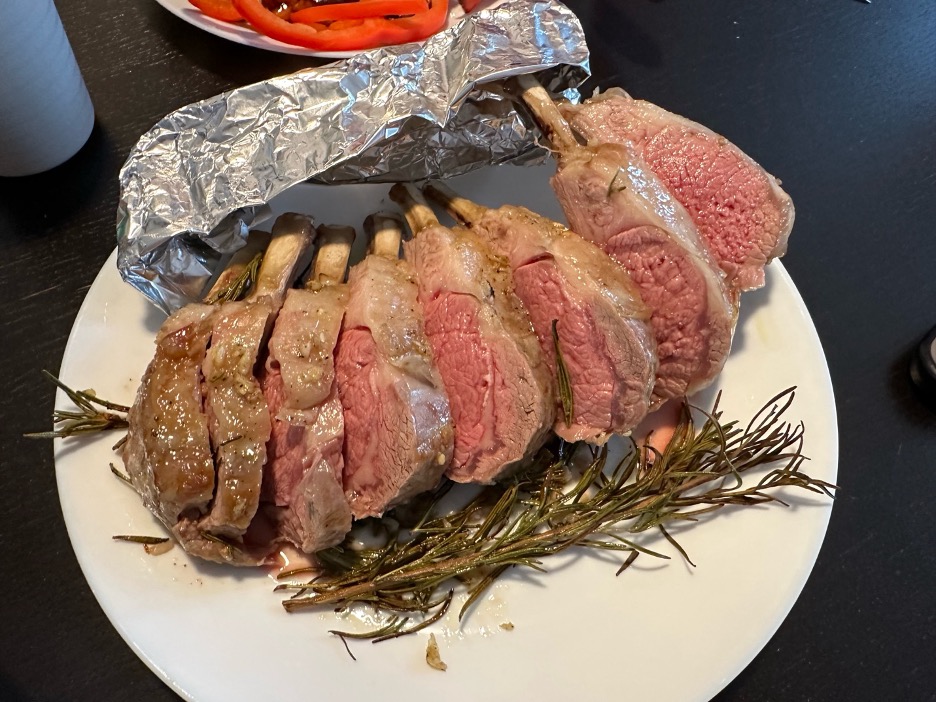
A rack of lamb, a staple I personally have for every Easter as a family tradition.
New Studies Around Meat As a Carcinogen?
Recent studies indicate that a high intake of processed meats such as ham, sausages, jerky, corned beef, and bacon is associated with an increased risk of colorectal cancer. Chemicals like nitrates that is commonly used to preserve processed meats, have been linked to bowel cancer.
There is also evidence suggesting that browning red meat at high temperatures, such as barbecuing, can produce carcinogenic compounds. However, animal-based proteins still offer key health benefits, including better absorption of iron and zinc, as well as being an excellent source of vitamin B12. This does not mean you need to eliminate meat entirely; rather, it’s important to maintain a healthy balance between animal- and plant-based proteins.
For more information on red meat and processed meat and their link to cancer, check out these reliable resources:
How To Eat Smart To Reduce Risk Of Cancer
While there is no definitive answer on how much red meat contributes to colorectal cancer, here are some practical tips for reducing risk while still including red meat and meat alternatives in your diet:
- Limit processed meats to special occasions only.
- Reduce red meat consumption by half.
- Increase intake of meat alternatives such as beans, legumes, poultry, eggs, and seafood.
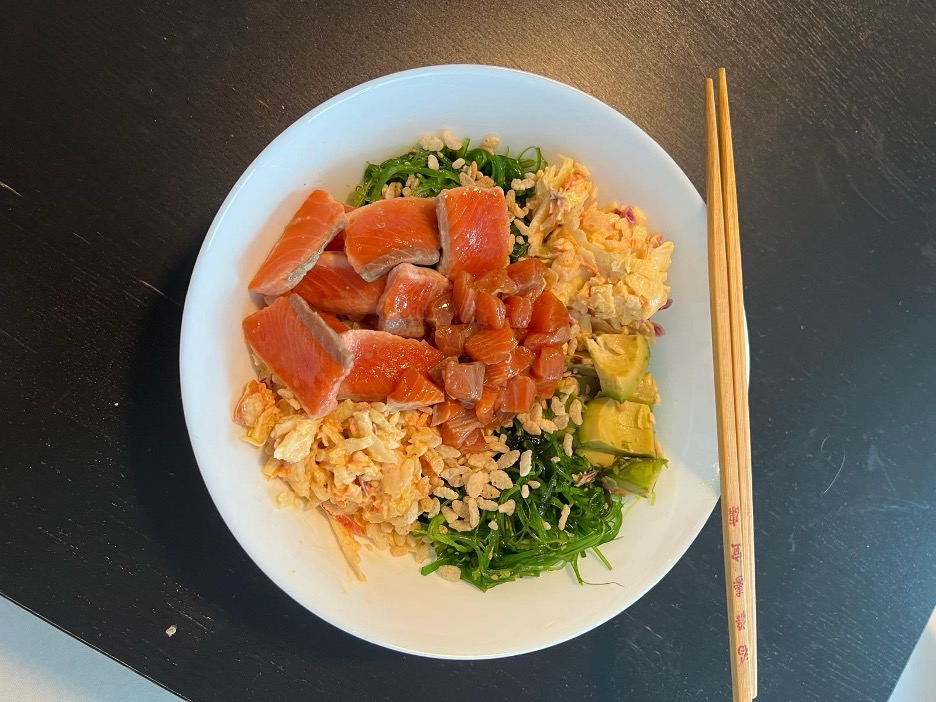
I was quite proud of this home-made salmon poke bowl with lightly seared sashimi salmon, rice puffs, seaweed, avocado and egg salad on a bed of rice
What Counts As One Serving of Lean Meat and Poultry, Fish, Eggs, Tofu, Nuts and Seeds and Legumes/Beans Group?
According to the Australian Dietary Guidelines, a standard serve from the lean meat and poultry, fish, eggs, tofu, nuts and seeds and legumes/beans group is:
- 65g cooked lean red meats (about 90-100g raw)
- 80g cooked lean poultry (100g raw)
- 100g cooked fish fillet (about 115g raw) or one small can of fish
- 2 large (120g) eggs
- 1 cup (150g) cooked or canned legumes/beans (preferably with no added salt)
- 170g tofu
- 30g nuts, seeds, peanut or almond butter or tahini or other nut or seed paste (preferably with no added salt or sugar)
Depending on your child, how much meat or meat alternatives your child needs per day varies. Here is a table on how many servings of meat or meat alternatives your child needs per day:
| Age (years) | Meat or meat alternatives* |
| 2-3 | 1 |
| 4-8 | 1½ |
| 9-11 | 2½ |
| 12-13 | 2½ |
| 14-18 | 2½ |
*Families following vegan diet need to make sure their child consumes enough legumes or beans as per the meat / meat alternative food group to meet their protein needs. Lacto-ovo vegetarian families can incorporate eggs on top of legumes or beans. For more details, refer to Eat for Health.
Tips to Encourage Your Child to Eat Meat or Meat Alternatives
Here are six simple strategies you can try at home to encourage your child to consume meat or meat alternatives
- Variety is key! Rotate between red meat, poultry, eggs, seafood, nuts, seeds, legumes, and beans to keep meals interesting. Your child may prefer some options over others, and that is okay.
- Include meat or alternatives at least twice a day.
- Use canned legumes as a quick and easy way to add meat alternatives to meals.
- Cook in bulk. Consider pre-cooking a larger batch so that you can store extras for another meal(s). For example, roast a whole chicken, serve half for dinner and use the other half for meals like chicken sandwiches or Caesar salads with chicken.
- Aim for two serves of fish per week. Fish is often easier for children to chew and hence they can be a popular choice of meat alternative. It is our job as parent to be mindful of bones of all type of fishes.
- Modify textures if needed. If your child struggles with chewing meat, try slicing it thinly or using lean minced meat instead.
To summarise, choosing lean red meat and incorporating a variety of meat alternatives in your child’s diet is important. Try to minimise processed meats due to their carcinogenic risk, and choose lean cuts of meat and poultry, trimming all visible fat. Fish is an excellent source of polyunsaturated fatty acids and should be included as part of a healthy diet twice a week.
Stay tuned for my final post on food groups, which will focus on dairy!
