There are five main food groups essential for a healthy body: grains and breads, fruits, vegetables and legumes / beans, dairy products, and meat or meat alternatives. Today, I’ll be focusing specifically on grains and breads.
Why Are Grains and Breads Important?
Grains and breads are a crucial food group because they provide carbohydrates, which serve as the body’s main source of energy. Most of our grain foods come from wheat, oats, rice, rye, barley, millet, quinoa, and corn, which are used to make a variety of foods, such as cereals, pasta, and bread.
Grain foods can be divided into four main subgroups:
- Breads – wraps, toast, focaccia, pita, roti, etc.
- Cereals – Weet-Bix, porridge, muesli, etc.
- Grains – rice, millet, oats, quinoa, etc.
- Other grain-based foods – pasta, noodles, crackers, etc.
Choosing Whole Grains
Choosing whole grains over refined grains provides additional benefits, such as increased fibre intake and higher levels of B-group vitamins and minerals, including iodine, iron, and zinc.
For children, it is especially important to have adequate grains and breads throughout the day, as carbohydrates are their primary energy source. Ideally, a little over half of a child’s daily energy intake should come from carbohydrates. (more specifically, we should for about 2/3 of our daily energy intake from carbohydrate).
Since grains and breads are excellent sources of carbohydrates, parents need to ensure their children consume the right amount. Too little can result in insufficient energy intake, which may lead to poor growth and lack of energy levels. On the flip side, too much can lead to excess energy intake, increasing the risk of overweight and obesity which is detrimental for children and adults alike.
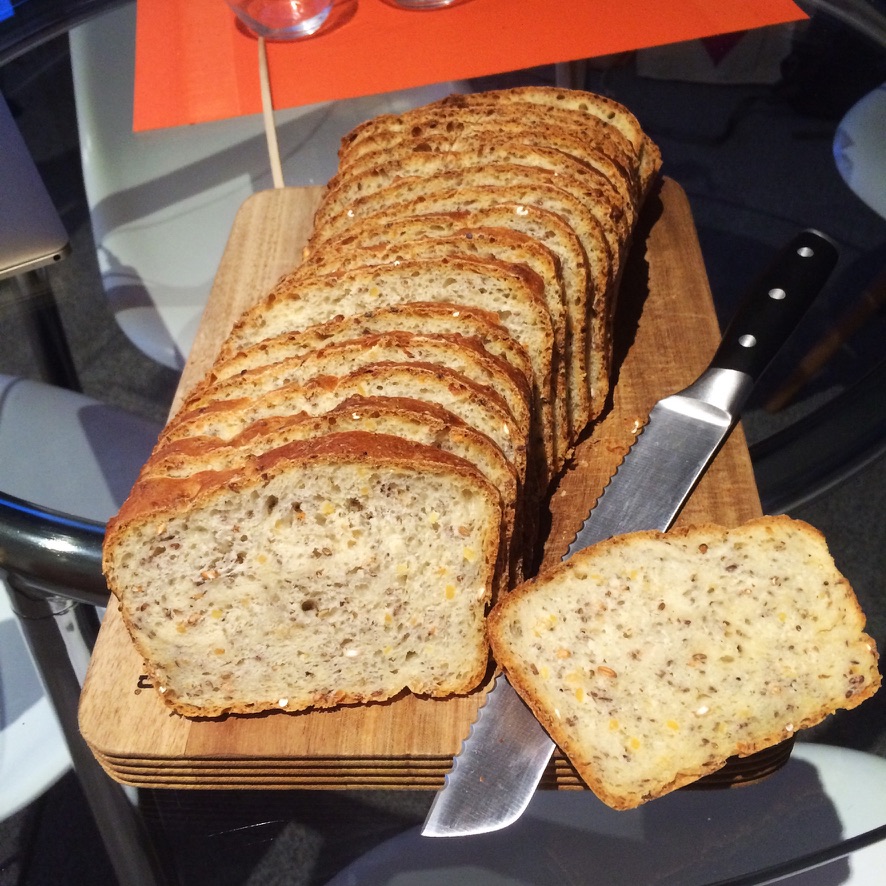
My first attempt at baking wholegrain bread!
Wholemeal vs Wholegrain: What’s the Difference?
Both wholemeal and wholegrain are excellent choices. However, if I had to pick, I would personally recommend wholegrain over wholemeal.
- Wholegrain refers to grains that are left mostly intact, retaining their natural nutrients and fibre.
- Wholemeal is essentially wholegrain that has been ground into smaller pieces. While still nutritious, it is slightly more processed than wholegrain.
Wholemeal still has plenty of nutritional benefits in it compared to highly refined foods such as white bread, white rice, or white pasta. This is because refined foods will lose the outer layer of the grain during processing, stripping away valuable nutrients of extra fibre, vitamins and minerals that wholegrain and wholewheat will have.
Both wholegrain and wholemeal varieties generally have a lower glycaemic index (GI), meaning their energy is released slowly into the bloodstream. This is a better energy source for children, who need a steady supply of energy to run, play, grow, and learn throughout the day.
Did You Know?
The brain primarily relies on carbohydrates for energy! That’s why ensuring your child has enough food from the grain food group is crucial for supporting brain function.
(Sourced from: Harvard Medical School)
Do Children Eat Enough Grains?
Most children love foods from the grains and breads group, as they are often associated with popular snacks like crackers or meals with sweet toppings, such as peanut butter, Nutella, pancakes with honey or maple syrup.
In my experience, most families I work with haveno trouble meeting the recommended grain intake. However, we as parents can focus should be on improving the quality of the grains offered to children.
What IS A Serving of Grains, AND How much is enough?
According to the Australian Dietary Guidelines, a standard serve from the grain food group is:
- 1 slice (40g) of bread
- ½ medium (40g) roll or flatbread
- ½ cup (75-120g) cooked rice, pasta, noodles, barley, buckwheat, semolina, polenta, bulgur, or quinoa
- ½ cup (120g) cooked porridge
- ⅔ cup (30g) wheat cereal flakes
- ¼ cup (30g) muesli
- 3 (35g) crispbreads
- 1 (60g) crumpet
- 1 small (35g) English muffin or scone
Depending on your child, how much your child needs to eat from the grain food group varies. Here is a table on how many servings of grains your child needs per day.
| Age (years) | Number Of Serve Of Grains |
| 2-3 | 4 |
| 4-8 | 4 |
| 9-11 | 4-5 |
| 12-13 | 5-6 |
| 14-18 | 6 |
For more details, refer to Eat for Health.
How to Improve the Quality of Grains in Your Child’s Diet
Here are seven simple swaps to improve the quality of grains in your child’s diet:
1️. Swap white bread for wholegrain or wholemeal bread.
2️. Choose brown rice or wild rice instead of white rice.
3️. Choose for wholewheat pasta over regular pasta.
4️. Use steel-cut oats instead ofinstant oats.
5️. Look for cereals that have higher fibre content per hundred grams. Whenever possible, I personally look for cereals that has <5g of sugar per serve for my own family.
6. Choose whole grain crackers over refined crackers.
7. Buy whole wheat flour over plain flour for cooking and baking.
As you can see, all you need to do is a few small swaps so that we as parents are providing the best nutrition for our children. Stay tuned for my next post about fruits!
