Vegetarian diets are quite common, with many families choosing this way of eating for various reasons, whether it is for cultural purposes, ethical belief, religion, environment, health or just family tradition. As a paediatric dietitian, it is important for me to ensure that children following a vegetarian diet receive all the essential nutrients, vitamins, and minerals needed for optimal growth. Let’s explore what a vegetarian diet entails, the key nutrients (both macronutrients and micronutrients) that can be challenging to maintain, and what parents need to know when following a vegetarian diet for themselves and their children.
What is a Vegetarian Diet?
A vegetarian diet means excluding meat products from the diet, but did you know there are different types of vegetarianism? The three most common ones are:
- Pescatarian diet – Includes seafood but excludes meat such as beef, pork and lamb; and poultry such as chicken and turkey.
- Lacto-ovo vegetarian diet – Includes eggs and dairy products but excludes meat, poultry, and seafood.
- Vegan diet – Excludes all animal products, including meat, poultry, seafood, dairy, eggs, and even honey.
In this blog post, I will focus specifically on the lacto-ovo vegetarian diet, where families continue to consume eggs and dairy products.
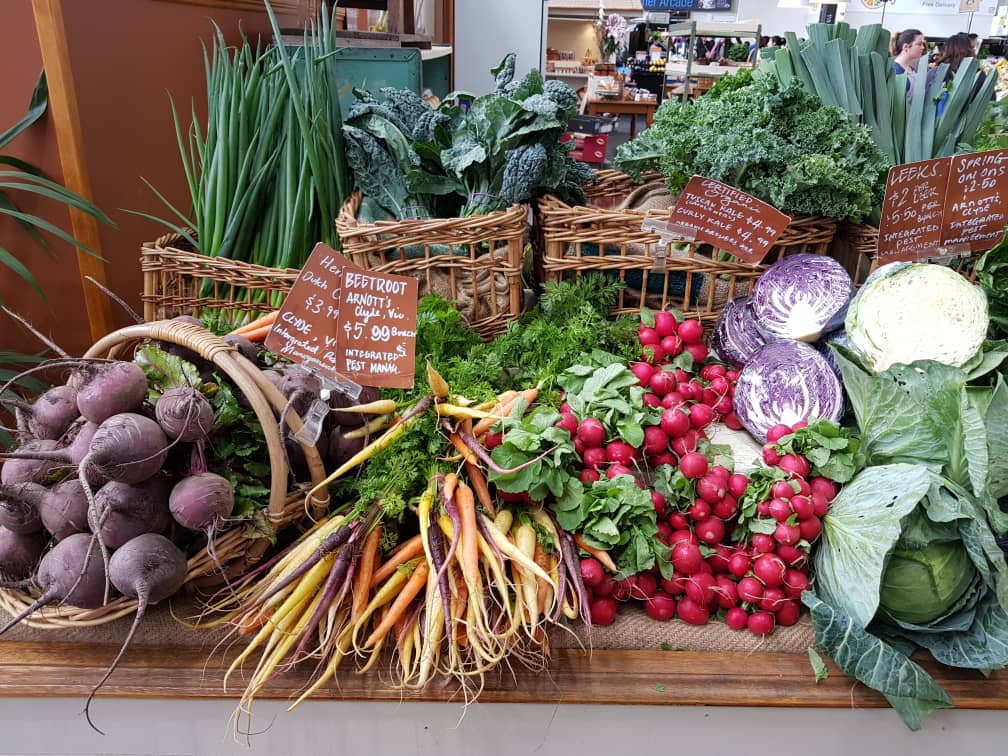
I love this photo of our local fruit and vegetable shop in the markets back in Australia.
Key Nutrients to Watch in a Vegetarian Diet
Children grow at different rates depending on their age, meaning there’s no one-size-fits-all approach to nutrition. However, children following a vegetarian diet may be at risk of deficiencies in key nutrients such as protein, iron, zinc, omega-3, calcium, Vitamin D, Iodine and vitamin B12.
Protein
Protein is essential for growth, immunity, and muscle development. Vegetarian children may be at risk of inadequate protein intake as it can be difficult to meet their protein needs with plant based protein. To give context on the amount of protein contained in high protein vegetarian food options (or meat alternatives) versus meat:
| Food | Serve size | Amount of protein (g) |
| Chicken breast | 80g | 27 |
| Beef steak | 70g | 22 |
| Eggs | 2 large | 15 |
| Beans / legumes | 1 cup | 14 |
| Tofu (the more firm, the higher the protein) | 100g | 10-15 |
| Cow’s milk | 1 cup | 9 |
| Soy milk | 1 cup | 8 |
| Nuts | 1/3 cup | 5 |
So based on the table above, it is easy to see why it is so much easier to meet a child’s protein needs with animal based protein. However, with proper planning it is possible to achieve adequate protein intake with children. It is especially important to ensure younger children (under the age of five) or children with fussy eating consume enough protein-rich foods, such as:
- Tofu
- Beans and lentils
- Eggs
- Nut or nut paste
- Dairy products (milk, cheese, yoghurt)
Iron
Iron is essential to produce red blood cells. A child who does not get enough iron is at risk of anaemia, which can lead to fatigue and poor growth.
- Infants: Exclusively breastfed babies from six months of age are at risk of low iron levels because breastmilk contains minimal iron. It is essential that exclusively breast fed babies have high iron foods introduced as one of their first foods during introduction of solids. Formula-fed babies receive iron from fortified formula but they should still be introduced to iron-rich solid foods from six months.
- Good vegetarian sources of iron:
- Legumes (beans, lentils, chickpeas)
- Eggs
- Tofu, ideally firm or extra-firm tofu
- Nuts and seeds (for infants and toddler, these should be given as nut pastes; whole nuts should be avoided for children under five due to choking risks)
- Iron-fortified baby cereals or whole grains
On top of that, phytate which is a naturally occurring compound found in nuts, seeds and legumes can interfere with iron and zinc absorption. As iron from plant-based sources is not as easily absorbed as iron from animal products, steps can be taken to enhance iron absorption by pairing iron-rich foods with vitamin C-rich foods, such as:
- Fruits such as oranges, strawberries and kiwi
- Vegetables such as capsicum, tomatoes, broccoli and cauliflower
A simple way to do this is to serve fruit alongside iron-rich foods or include vitamin C-rich vegetables in meals. So you can consider serving tofu stir fry with some capsicum, or serving toast with nut paste with fresh slices of oranges to boost iron intake.
Zinc
Zinc is important for growth and immunity. It is found in breastmilk and formula, as well as in:
- Dairy such as cow’s milk, cheese, and plain yoghurt
- Eggs
- Nutritional yeast
- Nuts & Seeds such as pine nuts, cashews, pumpkin seeds and hemp seeds
- Legumes such as beans and lentils, though bear in mind legumes also contain phytates which can interfere absorption
- Whole grains similar to legumes, although whole grains contain zinc, wholegrains also contain phytates which can also interfere absorption of zinc
It is important to note that it is difficult to detect zinc deficiency from blood test alone, although zinc deficiency can lead to poor growth. So it is important to make sure your child eats from a range of these high zinc foods to keep their zinc levels up.
Omega-3
Omega-3 fatty acids are used to make long chain fatty acids such as DHA and EPA, which are essential for brain and eye development and contribute to healthy growth and mental health.
- Sources: Omega-3 is naturally present in breastmilk and infant formula and can also be found in:
- Omega-3 enriched foods such as omega-3 fortified eggs and certain brands of margarines.
- Seaweed
- Edamame
- Eggs
- Seeds such as flaxseeds, chia seeds, hemp seeds.
- Nuts such as walnuts.
- Cooking oils: Choosing oils rich in omega-3, such as canola oil or flaxseed oil, can also help increase intake of omega-3.
Vitamin B12
Vitamin B12 is essential for maintaining healthy production of red blood cells, and vitamin B 12 is important to maintain healthy brain and nerves. It is naturally found only in animal-based foods, making it important to ensure adequate intake in a vegetarian diet.
- Infants: If you are breastfeeding and have sufficient vitamin B12 levels, your baby will likely receive enough as well. Infant formula is also fortified with vitamin B12, so formula-fed babies are generally not at risk of deficiency.
- Older children: Those no longer on breastmilk or formula should consume eggs, cheese, and yoghurt to meet their vitamin B12 needs.
- Other sources: Some plant-based foods, such as nutritional yeast, vitamin B12-fortified tofu and tempeh can also provide small amounts of vitamin B12.
Calcium & Vitamin D
Calcium and vitamin D is essential for bone health. Dairy is the best source of calcium although you can also find calcium in green leafy vegetables, tofu, nut and seeds and calcium fortified dairy alternatives. Here are some good sources of Calcium while following a vegetarian diet.
- Dairy Products: Milk, yogurt, and cheese are excellent sources of calcium. For instance, one cup of milk provides about 300 mg of calcium. Plant-based alternatives like calcium-fortified soy milk are great options for children who don’t consume dairy.
- Leafy Green Vegetables: While these are good sources, you’ll need to consume a larger amount compared to dairy. For example, one cup of cooked broccoli has around 45 mg of calcium, but only about half of that is absorbed due to the presence of compounds like oxalates.
- Tofu: Calcium content can vary, but firm tofu is generally higher in calcium. A cup of tofu can provide about 800 mg of calcium.
- Nuts and Seeds: Almonds, sesame seeds, and tahini are good sources. For example, 15 almonds have about 40 mg of calcium, while a tablespoon of tahini contains roughly 75 mg.
- Calcium-Fortified Foods: Check for calcium-fortified cereals and breads, which can add 100-200 mg of calcium per serving.
Despite adequate calcium intake, it is important to ensure adequate vitamin D levels for optimal bone health. We get most of our vitamin D from the sun exposure, and more recently there is evidence to recommended for breastfed infants to have supplementation of 800IU of Vitamin D per day.
Iodine
Iodine is important for healhty thyroid function. Iron deficiency can also affect both mental and physical development for children as well. Luckily in Australia, Iodine is fortified in common staple foods such as bread and table salt so iodine deficiency is uncommon. Otherwise food such as seaweed, eggs, cow’s milk and yoghurt are good sources of Iodine while following a vegetarian diet.
A Note on Fibre
It is with little doubt that most families following a vegetarian diet will have adequate fibre intake. The concern around fibre intake with vegetarian families is not around inadequacy of fibre in the child’s diet, rather it is around adequacy of macronutrient intake such as energy, protein and fat for children. As children are still growing, it is important to make sure children have enough macronutrients for adequate growth. Having high fibre foods can sometimes mean children do not eat enough energy for optimal growth. Furthermore, younger children and especially babies feel full quicker due to their smaller appetites. It is therefore important to make sure babies and toddlers have some refined foods such as peeled beans and refined grains to increase the energy and nutrient density of foods that they are consuming for optimal growth. Adding good fats such as olive oil, avocado and nut spreads are excellent ways to increase fat and therefore energy intake for young children.
Recommended serving size for children based on food groups
| Age (years) | Vegetables | Fruit | Grains | Meat alternatives | Milk & Dairy |
| 2-3 | 2½ | 1 | 4 | 1 | 1½ |
| 4-8 | 4½ | 1½ | 4 | 1½ | 1½ – 2 |
| 9-11 | 5 | 2 | 4-5 | 2½ | 2½ – 3 |
| 12-13 | 5 – 5½ | 2 | 5-6 | 2½ | 3½ |
| 14-18 | 5 – 5½ | 2 | 6 | 2½ | 3½ |
Sourced from here.
Take away message
A well-planned vegetarian diet can meet a child’s nutritional needs, but it requires careful attention to key nutrients like protein, iron, zinc, omega-3, calcium, Vitamin D, Iodine and vitamin B12. By including a variety of nutrient-rich plant-based foods and fortified products, parents can support their child’s healthy growth and development. It is also important to provide some refined foods for younger children and babies as they have smaller appetite and can fill up quickly on low density, high fibre foods.
If you have concerns about your child’s vegetarian diet, consider speaking to your doctor, a paediatrician or you can get a referral to see a paediatric dietitian for personalised advice that works for your family.
For those who would like to read more about specific nutrients this website here is an excellent and reliable resource.
