Some of the most common questions I get as a paediatric dietitian from parents is, “How do I get my child to eat vegetables?” or “Why are vegetables such a challenging food for children?”. Allow me to explain my experience of working with families around eating vegetables and what can we as parent do to help children accept vegetables more readily.
Why Do Children Struggle with Vegetables?
First of all, it is well researched that babies have an innate preference for sweet foods. This means most babies will naturally enjoy fruit because it is sweet. Think about evolutionary times when hunters and gatherers had to find food. Sweet foods, such as ripe fruits, were generally safe to eat, whereas bitter or sour foods were often poisonous. This explains why babies instinctively prefer sweet flavours and tend to reject foods with bitter or sour notes. Many vegetables have a slight bitterness, which can take time to get used to. When a baby refuses a vegetable, they aren’t necessarily being fussy, it is just their way of figuring out what is safe to eat, based on their innate evolutionary preferences.
Chewing And Eating Skills
Unlike foods such as bread, vegetables can also be challenging from an oral motor skills perspective. If we break down different food groups and the amount of oral motor skills required to eat them:
- Fruit is generally soft, juicy, and easy to chew. Don’t forget the natural sweetness in them means babies are more likely to want to try fruits again!
- Grain-based foods (such as bread and pasta) are also easy to manage with little chewing effort.
- Dairy (such as milk or formula) requires no chewing (only swallowing) and is familiar to infants from birth.
- Meat can be tricky due to its chewy texture, whereas alternatives like eggs, beans, and tofu are easier to manage where some chewing is required but a baby with immature oral-motor skills can manage.
- Vegetables vary in texture. Root vegetables like potatoes and carrots are relatively easy to chew, but leafy greens are be more difficult to pull apart and break down. Like meat, they require more chewing effort compared to most other food groups.
For a child to successfully eat a vegetable, they need to break it down into small pieces—almost a purée, before swallowing. If they try to swallow a large chunk, they may gag as a natural safety response to prevent choking. Gagging is a normal part of learning to eat and helps keep babies safe. Also don’t forget babies with their gummy smile means they also do not have teeth to help break down difficult foods such as meat and vegetables like we would as an adult. Even if a baby does not mind the taste of vegetables, having immature oral-motor skills on top of not having teeth means they might end up just sucking on vegetables and spit out bits and pieces that they cannot manage.
How Can We Help Children Accept Vegetables?
There are a few strategies to increase vegetable acceptance: altering texture, appearance, and taste. Many families tell me their child refuses spinach but will eat it when it’s blended into some form of sauce. So, whys is this the case?
When a parent hides vegetables in a sauce, two things happen:
- The texture of the vegetable is changed where they are chopped finely or blended. Essentially, parents have removed the barrier of immature oral motor skills to bite and chew a vegetable effectively, making vegetables easier to eat. There is a good chance that if you cut up your vegetables for your child, and allow them to explore these vegetables on your own, they might actually accept it because they can actually eat it effectively without gagging or choking.
- The taste is altered where flavours from the sauce mask the natural bitterness of vegetables. Tomato-based and cheese-based sauces are particularly effective because they have bold flavours. Tomatoes have a tangy, savoury taste, while cheese is high in salt—both helping to reduce the bitterness of vegetables.
While hiding vegetables helps increase vegetable intake, it doesn’t necessarily teach children how to eat vegetables and it also does not teach children to appreciate the natural flavour of vegetables.
Encouragement? Or Pressure?
Many parents feel frustrated when their child refuses vegetables and unknowingly apply pressure, using phrases like:
- “Just try it, you’ll like it.”
- “You ate this yesterday, why won’t you eat it today?”
- “If you eat your veggies, you’ll get dessert.”
While these strategies may work short-term, they are likely to backfire in the long run. When children feel pressured, they may associate vegetables with stress or only eat them as a means to get a reward rather than developing a genuine preference for them. We rarely hear parents urging children to eat more crackers or saying, “Come on, have another one.” Yet, when it comes to vegetables, the pressure is significantly more intense. In fact, some families have told me their child eats better the parents are engaged in another activity, like stepping away from the dining table to the kitchen to start the washing. This happens because the child is given space to decide for themselves whether they want to try a new vegetable, rather than feeling forced.
However, even well-meaning enthusiasm can backfire. For example, saying, “You just had a bite of peas, why not try another?” when a child clearly says they have enough for now might seem encouraging, but it can make a child feel like their opinion doesn’t matter. If they sense that trying something means they’re expected to keep eating it, they may become hesitant to try new foods in the future. When we pressure little ones to eat more, mealtimes can become stressful, sometimes to the point where they lose interest in eating altogether.
Encouraging Curiosity, Not Pressure
Instead of pressuring children, we can encourage curiosity. For example:
- Give them control: Say, “Have a bite and tell me what you think.” If they say it’s yucky, remain neutral and ask, “What makes it yucky? The colour? The texture? The taste?” Let them express their opinion without leading them.
- Acknowledge preferences: Assure them that it’s normal to have foods they like and foods they’re unsure about. Taste buds change over time, and today’s “yucky” food might become a favourite in the future.
- Compare different preparations: If they dislike raw carrots but enjoy roasted ones, talk about the difference: “I wonder why you like Grandma’s carrots better—maybe because they’re cooked differently?”
- Avoid labelling food as “good” or “bad”: Instead of calling something “healthy” or “unhealthy,” focus on the experience. Encourage them to think about food as food, removing the pressure around eating.
Exploring Vegetables Together
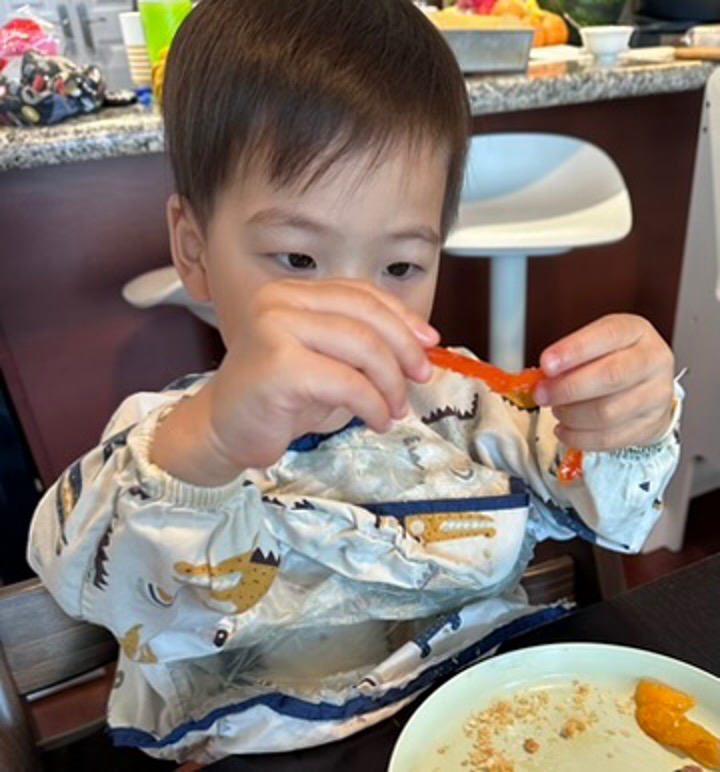
Rather than stopping at one attempt, experiment with different cooking methods. You might need to work out what your child likes if your child is quite young. However, if your child is a little older, around 2-3 years onwards, you can work with your child to find out how to make vegetables better, and teach your child that one same vegetable can taste completely different depending on how it’s prepared:
- Cut into different sizes (big chunks vs. finely chopped)
- Cooked differently (roasted, baked, grilled, steamed, stir-fried)
- Served with different seasonings (herbs, spices, cheese, or dips)
I personally enjoy roasted carrots because they develop a natural sweetness, but I don’t enjoy raw carrot sticks. Children need time, exposure, and the vocabulary to articulate what they do and don’t like. When they simply say “yuck,” it doesn’t mean they’ll never eat that vegetable, it just means they’re still figuring it out.
By taking a curious, patient approach and reducing pressure, children can explore vegetables in a way that feels safe and enjoyable. The goal isn’t just for them to eat vegetables, it’s for them to develop a lifelong positive relationship with food.
