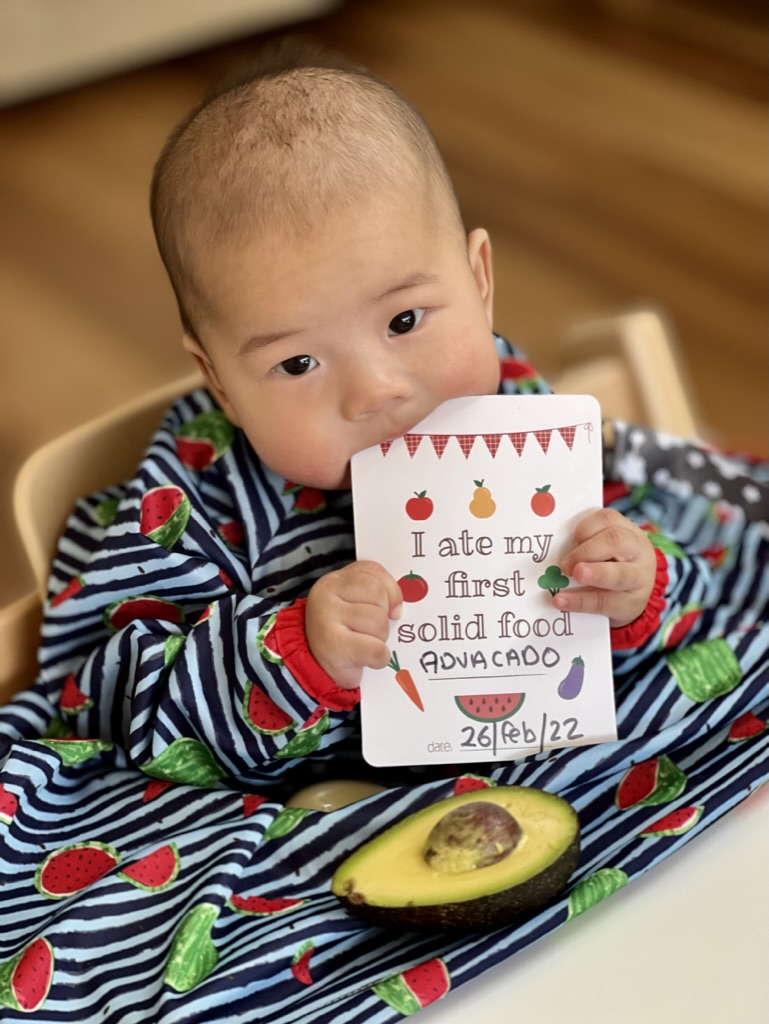
After a few months of focusing on feeding and sleep routines, you might start to wonder, How do I know if my baby is ready for solids? As a mom and a pediatric dietitian, I often hear parents ask this question, along with another common one: How will food affect my baby’s sleep? While every baby is different, some evidence suggests that babies ready for solids may start demanding more milk. This could mean your little one may want more milk during the day as well as at night, and milk alone may no longer be enough to satisfy them through the night. That said, most babies will still need their usual one or two feeds overnight, and starting solids doesn’t necessarily mean your baby will sleep through the night.
So, what are the signs your baby might be ready for solids? Here are some key things to look out for before making that decision.
1. Age
World Health Organisation (WHO) recommend introducing solids around six months, but not before four months. Keep in mind that age alone isn’t the only factor—there are physical and developmental signs to watch for.
2. Can Your Baby Sit Up?
The ability to sit up, even with some support, is essential for safely introducing solid foods. A baby who can sit with pillows propped around them and doesn’t topple forward onto the food tray may be ready. Sitting up also helps with maintaining stability and hence may help prevent choking incidents.
3. Good head & Neck Control
Good neck control means your baby can hold their head steady, looking left and right without it flopping. This ability is crucial; eating while struggling to control the head makes it challenging for babies to swallow safely. If your baby’s head tends to lean or flop during meals, they may need a bit more time to strengthen their head and neck support.
4. Interest in Food
One of the clearest signs is your baby’s interest in food! They might reach for food in your hand, laugh at the sight of food, or focus intensely on you as you eat. Some babies even mimic chewing motions or smack their lips as if imitating you. These cues suggest curiosity and readiness for the eating experience.
5. If Your Baby Was Premature
If your baby was born prematurely, be sure to consider their corrected age rather than their birth age. Developmental milestones often vary, so avoid comparing your baby’s readiness to others, whether it’s your friends’ children or even siblings.
6. Loss of the Newborn Tongue-Thrust Reflex
Most babies are born with a tongue-thrust reflex, which pushes objects out of their mouths. Around six months, this reflex usually diminishes, allowing babies to swallow food more easily.
7. Are You Ready?
Perhaps most important is your own readiness! Introducing solids should be a positive, enjoyable experience for both you and your baby. Life circumstances, like moving or major schedule changes, can make it tough to start a new routine with solids. I remember when my GP suggested I start solids for my son right before we moved homes as he was approaching 6 months old. I wasn’t ready, and I knew that starting solids while moving would only add to the chaos. Ultimately, you know your family dynamic best. If the timing doesn’t feel right, speak to your health care provider, it is okay to wait a little longer as long as your baby is thriving.
What Comes Next?
Ready to dive into the world of baby food? We’ll talk about the best first foods, what you need, and how to make this process smooth and enjoyable in the coming months. Stay tuned!